
SIL vs SDA is a question many people ask when they plan their NDIS home and living supports. In short, supported independent living (SIL) pays for the support workers who help you at home, while specialist disability accommodation (SDA) is the home itself. This guide explains each one, how they work together, who pays the rent, and what to check before you choose a provider.
SIL vs SDA: quick summary
- SIL is funding for a support worker to help or supervise you 24 hours a day, 7 days a week.
- SDA is housing designed for people with extreme functional impairment or very high support needs.
- Other than SDA, the NDIS does not fund housing.
- Many people who live in SDA also have SIL funding in their plan.
- SDA funding pays the SDA provider, SIL funding pays for support workers, and you pay the rent contribution and bills.
- Both SIL and SDA can only be delivered by registered providers, however your plan is managed.
SIL vs SDA side by side
| SIL | SDA | |
|---|---|---|
| What it is | Funding for a support worker to help or supervise you at home | Housing with features that meet your disability support needs |
| What it pays for | Help with daily tasks like personal care, cooking and cleaning | The SDA provider, for the specially designed home |
| What it does not cover | Rent and day-to-day expenses like groceries | Supports in the home, such as personal care or SIL |
| Provider | Must be registered (or applied to register before 1 October 2026) | Must be registered, with each home enrolled with the NDIA |
| Where it sits | Funding for in-home supports | Capital supports, in the home modifications and SDA category |
Sources: NDIS pages on SIL (current as of 1 October 2026), SDA (1 July 2026) and capital supports (16 July 2026).
What SIL is
The NDIA describes SIL as funding for a support worker to help or supervise you 24 hours a day, 7 days a week. You may share a support worker or have an individual support worker, depending on how much help you need.
SIL may be suitable if you need a support worker to stay with you 24 hours a day, including overnight, and to help with daily activities for at least 8 of those hours. Support workers can help with personal care, showering and getting dressed, eating and cooking meals, and household tasks like cleaning. SIL is designed to help you live as independently as possible while you build your skills. Our guide to help with daily life tasks explains how this kind of support appears in an NDIS plan.
SIL can’t be used for rent or other day-to-day expenses like groceries. If you choose and manage your own support workers, that is a self-directed arrangement rather than SIL.
What SDA is
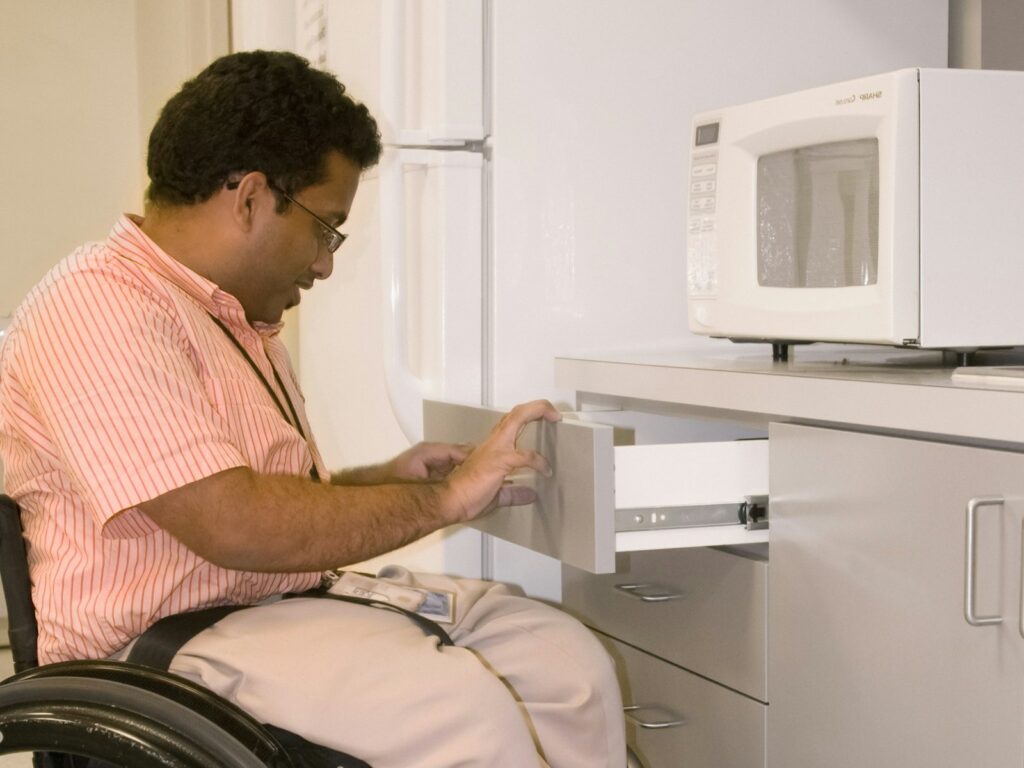
SDA is a range of housing for people with extreme functional impairment or very high support needs. It may be suitable when other home and living supports don’t meet your disability needs. SDA properties can include features like wide doorways, wheelchair-accessible kitchen sinks, ceiling hoists or button-operated doors.
An SDA home can be a house, apartment, villa, duplex or townhouse. The NDIA groups SDA into 4 design categories:
- Improved liveability: better physical access and features for people with sensory, intellectual or cognitive impairments.
- Fully accessible: a high level of physical access, for example if you use a wheelchair at home.
- Robust: very strong and durable housing, built to be safe for you and others.
- High physical support: a high level of physical access for people who need very high levels of support, which may include ceiling hoists or backup power.
SDA does not include the supports you get inside the home. The NDIA lists personal care, SIL, individualised living options and assistive technology as things that are not SDA.
SIL vs SDA: how they work together
The two are often paired. The NDIA says many participants living in SDA also have funding for in-home supports, like SIL. In that case, SDA funding pays the SDA provider, SIL funding pays for your support workers, and you pay the rent and bills.
SDA is often a home shared with a small number of other people, where you have your own private bedroom. Sometimes a participant may be able to live on their own, if that is the best option for their needs.
SDA is only for people with extreme functional impairment or very high support needs. The NDIA notes that most participants have a home by owning or renting it, or through social housing.
SIL vs SDA: who pays the rent?
This is a common question. Other than SDA, the NDIS does not fund housing. SIL funding can’t be used for rent or for day-to-day expenses like groceries.
If you live in SDA, you still pay a reasonable rent contribution and other day-to-day living costs, such as electricity bills. Your rent contribution is an agreed amount paid directly to your SDA provider.
If you need affordable housing or might become homeless, the NDIA points to state and territory government programs, and your my NDIS contact can help you learn about them.
SIL vs SDA: provider rules
- Registered providers only. SIL and SDA are both on the NDIA’s list of supports you can only get from a registered provider, even if your plan is self-managed or plan-managed.
- SIL registration date. SIL can only be delivered by providers that are registered or applied to register before 1 October 2026.
- SDA homes are enrolled. SDA providers apply to enrol each home with the NDIA, and the home must meet the SDA standards.
- Service agreement and my provider. For SDA, you need a written service agreement, and you record your SDA provider on your plan as a my provider.
You can check any provider’s registration on the NDIS Commission’s provider register, and search for registered providers with the NDIS provider finder.
How to ask for SIL or SDA
Both are home and living supports, so you ask for them the same way. Talk to your my NDIS contact about your needs and goals, and provide recent evidence from a treating health professional about your daily support and housing needs. The NDIA then decides whether the supports can be included in your plan. If you are moving from hospital or the family home, our guide on what to ask before a move into SIL housing walks through the steps.
If you already have SDA funding, the NDIA’s SDA finder lets you search vacancies by location, building type and maximum price per year.
How to check this yourself
If you are comparing SIL vs SDA before a plan meeting, these NDIA pages are the source for everything in this guide.
- What is supported independent living (SIL) (NDIS, current as of 1 October 2026)
- What is specialist disability accommodation (SDA) (NDIS, current as of 1 July 2026)
- Guide to your NDIS home and living options (NDIS, current as of 17 August 2026)
- How to find and choose a provider (NDIS, current as of 1 October 2026)
Frequently asked questions
What is the difference between SIL and SDA?
SIL pays for support workers who help or supervise you at home. SDA is the housing itself, designed for people with extreme functional impairment or very high support needs.
Is it SIL vs SDA, or can I have both?
You can have both. The NDIA says many participants living in SDA also have SIL funding for their in-home supports.
Does SIL pay for my rent?
No. SIL can’t be used for rent or day-to-day expenses like groceries.
Do I pay rent if I live in SDA?
Yes. You pay a reasonable rent contribution to your SDA provider, plus day-to-day living costs such as electricity.
Can I live on my own in SDA?
Sometimes. SDA is usually a shared home with your own bedroom, but the NDIA says some participants may be able to live on their own if that is the best option for their needs.
Does my SIL or SDA provider have to be registered?
Yes. Both can only come from registered providers, however your plan is managed.
How do I find SDA vacancies?
If you have SDA funding, you can use the NDIA’s SDA finder. A support coordinator or recovery coach can also help you find an SDA provider.
How Goaldis can help
Goaldis Community Services is a registered NDIS provider (see the NDIS Commission register). We deliver Supported Independent Living across nine shared living homes in Sydney, with support planned around each person’s needs, goals and routines. Goaldis provides the support in each home.
Call 1300 212 035, send us a message, or ask your support coordinator to refer you.
Related reading
- Supported Independent Living at Goaldis
- Transitioning to SIL housing: questions to ask before you move
- NDIS help: supports that must come from a registered provider
Disclaimer: This article is general information only and does not replace personal advice from the NDIA, your my NDIS contact or your support coordinator. It is current as at 19 October 2026 and reflects the NDIS pages listed under “How to check this yourself”, with the dates shown there. Examples are illustrative and are not an entitlement: what you can use depends on your own plan. NDIS rules change, so confirm anything important at ndis.gov.au.